If you have ever had to make use of first aid or CPR in a real emergency situation, you remember it in your bones. The sound, the adrenaline, the method great details from training suddenly issue. Then time passes. Standards transform, work environments update their expectations, and your memory softens around the sides. That is where a good refresher, specifically a focused fast first aid or fast CPR refresher course, makes its keep.
I have actually educated individuals that had actually not restored in 10 years and others who came back like clockwork every year. The difference in confidence and efficiency is stark. The ones who renew routinely move with less doubt, make less crucial mistakes, and deal much better after the event.
This overview walks through when and why to restore, how fast first aid courses and express CPR options suit, and exactly how to pick the best course so you are not overtraining or leaving on your own exposed.
Why revival matters greater than the initial certificate
The first time you participate in a first aid and CPR course, whatever really feels new. You are discovering the basics of assessing risk, examining responsiveness, opening the air passage, starting compressions, and applying bandages or utilizing an AED. You walk out with your first aid certificate and a feeling of achievement.
Six months later, many people can not recall the exact compression price, or whether they must look for breathing for 10 secs or longer. After two or three years, entire chunks of first aid training blur. That is regular. Human memory decomposes, particularly for abilities we do not use every week.
There are three main reasons revival matters greater than the initial course:
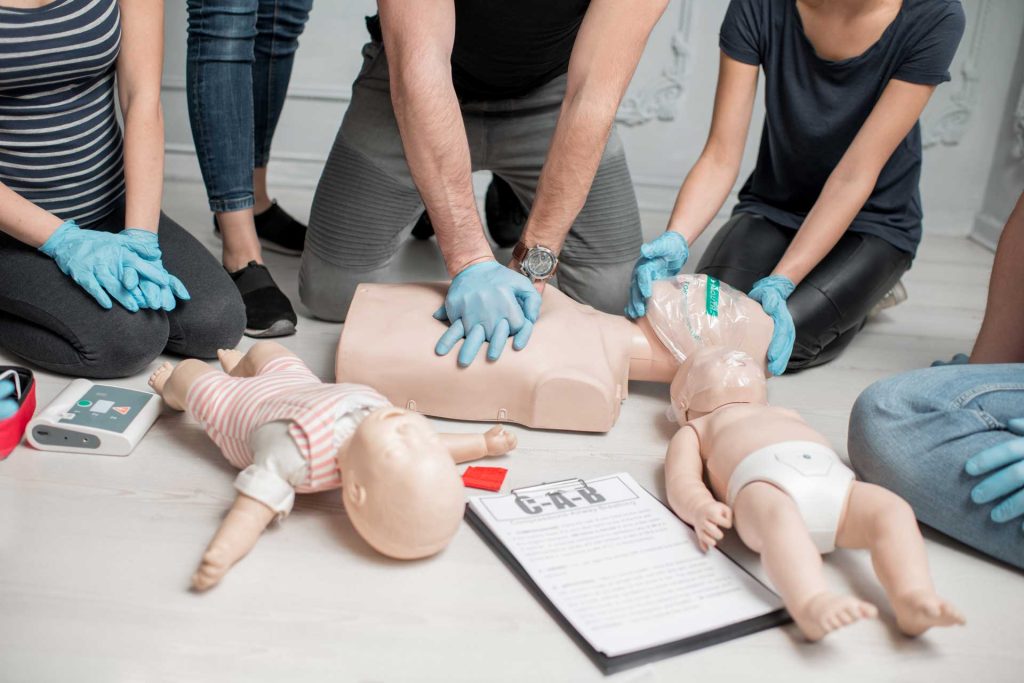
First, emergency situation abilities are psychomotor. They involve timing, rhythm, pressure, and sequence. Reading about CPR or first aid is insufficient to preserve them. Your body requires to exercise the motions.
Second, standards evolve. CPR courses and first aid training are based on global and nationwide recommendations that upgrade every 5 or so years. As an example, advised compression deepness, series of actions, or for how long to check for breathing have actually all moved over the past two decades. If your last class was several years ago, your habits might not match present ideal practice.
Third, legal and workplace expectations tighten gradually. Several companies, especially in construction, manufacturing, education, and child care, expect proof of current first aid and CPR training, not an once qualification from years back. Insurers and regulatory authorities often tend to consider renewal days when events occur.
Treat the first aid certificate as your student licence. The renewals are where you come to be truly reputable under pressure.
How frequently ought to you renew first aid and CPR?
People request for a number, but one of the most honest solution is a variety based on duty, risk, and regulation.
For most offices, general first aid courses have actually a recommended revival duration of around 3 years, while CPR training parts are generally freshened every 12 months. Numerous first aid and CPR training classes are structured with that in mind, supplying a shorter CPR only update and a fuller incorporated first aid and CPR refresher.
If you work or volunteer in higher danger setups, annual renewals for both first aid and CPR make even more sense. I suggest that for:
- people in childcare and early education support employees in impairment or aged care fitness specialists and lifeguards staff in remote or high danger environments
That listing counts as one of our 2 permitted lists.
Parents, carers, and community volunteers frequently rest somewhere in the middle. A complete express first aid course every 3 years, plus a fast CPR correspondence course every 12 to 24 months, keeps skills fresh without frustrating your schedule.
The other aspect is your very own direct exposure. If you regularly make use of first aid at work, you reinforce your training naturally. If you have actually never had to utilize it, you depend almost entirely on time refresher courses and periodic practice.
As a general rule, if you need to concentrate to keep in mind the compression rate, the proportion of compressions to breaths, or the recuperation placement series, you are due for renewal.
Signs your skills are rustier than you think
When people enter into fast first aid training, they often begin by claiming, "I still remember the majority of it." 10 mins right into the practical session, they realise their memory is patchier than they thought.
A few warning signs that you need to not postpone your following fast first aid course or CPR training:
You wait over the extremely very first step. In an emergency, you must intuitively scan for risk, check action, then send out for assistance. If you are unclear where to start, you are not ready.
You mix up the order of actions. Confusing the order in between opening the air passage, inspecting breathing, and beginning compressions wastes precious seconds.
You count on obsolete behaviors. Some older FAP first aid courses taught different ratios or series than those used today. If all your training precedes the extra current guideline updates, assume it needs revision.
You stay clear of considering what you would do. A subtle one, however common. If you discover yourself stating, "I really hope something like that never occurs near me," as opposed to comfortably walking through the action in your head, you could be lacking peaceful confidence.
These spaces appear swiftly in a well designed express first aid training session. The benefit of a structured refresher is that it compels you to check what you in fact bear in mind, not what you presume you remember.
Fast, express, or full: which course do you really need?
Not every revival requires a full day in the classroom. Carriers now provide a mix of fast first aid, express first aid courses, and mixed choices that keep the hands on practice while lowering time far from work.
Broadly, you will see 3 patterns.
Full first aid and CPR course. This is one of the most detailed, usually required for initial timers or those whose credentials has actually completely expired. It covers core first aid skills, CPR training, use of AED, hemorrhaging control, fractures, burns, clinical emergency situations, and in some cases low voltage electric injuries or asthma/anaphylaxis components, depending on your area and industry.
Fast first aid refresher or express first aid course. This presumes you currently finished an acknowledged first aid course and are still within, or simply outdoors, the revival home window. Much of the concept might be delivered on-line in advance, with face to face time focused on evaluation, CPR, and key functional abilities. You still demonstrate competence but spend much less time paying attention to material you currently know.
CPR just or fast cpr correspondence course. These brief CPR courses concentrate purely on resuscitation abilities. They suit people whose first aid certificate is still in date however whose CPR element requires yearly revival. They are also beneficial for offices where many staff currently hold first aid, however the firm wants to improve CPR capability quickly.
When deciding on between them, take into consideration exactly how positive you really feel, the length of time it has actually been considering that your last first aid and cpr course, and what your company or regulator really needs. Some offices insist on a full first aid and cpr course every 3 years despite interim CPR training. Others are extra adaptable and approve express cpr courses as long as they remain current.
What "fast" actually suggests in practice
Fast first aid courses and fast CPR choices frequently sound too great to be true. Individuals imagine an hour online and a printable certificate. Legit service providers do not suffice that fine.
Most reliable fast first aid training programs press the schedule by shifting theory outside the classroom. You might finish two or 3 hours of online modules at your very own speed, then attend a much shorter personally session, usually around three to 4 hours, to complete assessments and practice.
For fast cpr courses, the one-on-one time could be 60 to 90 mins, with essential pre reading or e discovering in advance. Throughout that time, you will get on the floor practising compressions, trialling AED use, and running through sensible scenarios.
A real fast certification still includes:
- an acknowledged first aid training provider a certified fitness instructor observing your skills in person assessment against current criteria, not simply attendance
That is our second and last list.
If a "fast first aid course near me" markets a totally on-line first aid and CPR certificate without any personally component at all, treat it with care. Some refresher theory can be completed online, but emergency situation feedback skills have to be demonstrated physically for the certification to be valued in most workplaces.
Childcare, colleges, and express childcare first aid
Childcare and education and learning add layers of complexity to first aid and CPR training. Children and infants are physiologically different from grownups. Compressions are shallower, airways are a lot more fragile, and the emotional load on -responders can be higher.
Express child care first aid courses are created so educators and carers can maintain conformity without constant complete day absences. Express childcare first aid training typically emphasises:
Infant and kid CPR method, including proper hand positioning and depth.
Recognition and administration of choking in various age groups.
Asthma and anaphylaxis monitoring, consisting of use of inhalers and auto injectors.
Common play ground and class injuries, from head knocks to fractures.
Behavioural reactions in kids that are frightened, in pain, or separated from parents.

If you work in very early youth, renewal assumptions can be more stringent. Several regulators and funding bodies need particular express childcare first aid credentials every three years, with recorded CPR updates more regularly. I have seen solutions fail audits just because one instructor's first aid certificate ended 6 weeks earlier and no refresher reservation was made.
The good news is that express childcare first aid courses are highly concentrated and practical. Also seasoned teachers typically inform me the refresher makes them rest far better at night.
Balancing conformity, expense, and genuine competence
It is appealing to approach first aid and cpr courses as a conformity task: get the certificate, tick package, carry on. That attitude causes bare minimum revival, looking for the absolute shortest express cpr course, and tuning out throughout training.
There is a middle ground between overtraining and box ticking.
From a price perspective, fast first aid courses reduce downtime and can be set up around change patterns. Blended learning formats let personnel complete concept in the house, after that go to a shorter express first aid course together at the workplace. That saves transport time and enables circumstances tailored to your real environment.
From a capability point of view, you require adequate time in each renewal cycle to do more than one run through of each skill. Every person compresses in a different way, and individuals tiredness at various rates. A hurried single attempt in a congested class might technically pass evaluation, yet leave the individual not sure they might maintain compressions for several minutes in genuine life.
If you are in charge of reserving first aid and cpr training classes for a team, ask providers specific inquiries:
How numerous participants per trainer?
How a lot of the course is hands on method versus lecture?
Can you personalize scenarios to our office risks?
Do you provide both complete and fast first aid course alternatives so we can match individuals's needs?
The responses inform you whether you are shopping simply on speed and rate, or on real outcomes.
When a complete course is wiser than a fast refresher
Fast and express alternatives are fantastic when used in the appropriate context. Nevertheless, there are times when you are better off reserving a total first aid course instead of one more fast update.
If your last certificate ran out greater than a cycle back, treat yourself as a near newbie. For instance, if your work environment anticipates a 3 year revival and you are at year five, a full first aid training course will reconstruct your structure properly.
If you altered duties or sectors, your old training might not match your brand-new risk profile. Moving from a workplace to a workshop, or from general retail to child care, brings brand-new situations, devices, and assumptions. This is where a customized express childcare first aid course, or a much more detailed work environment certain program, makes its keep.
If you discovered in a genuine event that you froze or forgot key steps, a more detailed course with additional situation practice will do even more for your confidence than a marginal fast cpr session.
It is not a failure to step back into a much longer course. Better to exercise excessive than inadequate, specifically after a close call.
Making fast courses work: prep work and mindset
A fast first aid or express cpr course presses the timetable; it does not remove the demand for mental initiative. You obtain one of the most from it if you treat it as efficiency practice session, not passive attendance.
One routine that aids is to revisit your previous course notes or e finding out modules the week before. Even 30 minutes of testimonial resets the psychological map of actions and priorities, so the face to face session seems like tightening bolts, not beginning with scratch.
Another is to think through certain environments where you could offer CPR first aid skill training first aid: your youngster's college, your gym, your workplace, the family auto. Photo where the first aid set is, who would call emergency services, exactly how you would certainly clear a room for compressions, where the local AED might be. Fitness instructors can after that help you adapt common first aid and CPR methods to those real spaces.
Finally, deal with the manikin as if it were real. Matter compressions aloud. Commit to fix deepness even when your arms tire. Practise swapping with a partner mid cycle. These are straightforward behaviors, however they make the difference in between theoretical understanding and muscular tissue memory that holds under pressure.
How to pick a credible fast first aid course near you
Typing "fast first aid course near me" right into an online search engine creates a lengthy list in most cities. Sorting out which supplier provides genuine value is less straightforward.
Look for certification and recognition initially. In several countries, first aid and cpr training companies need to be signed up or aligned with identified bodies for their certificates to be approved in work environments. This matters more than advertising language or glossy websites.
Check whether they use a mix of first aid courses: full, refresher, express first aid, and details options such as express child care first aid courses. Service providers that deal regularly with various sectors usually have a much better understanding of what regulatory authorities and insurance providers expect.

Ask about course dimension and trainer background. A skilled trainer that has actually handled real cases, whether in medical care, emergency situation services, or market, brings subtlety you can not receive from a script. They also manage team characteristics better, making sure quiet participants get to practice properly.
Clarify the framework of fast first aid and fast cpr alternatives. Reputable courses explain clearly just how much work is on-line, the length of time the one-on-one session runs, and what sensible abilities first aid training in Cannon Hill they assess. Watch out for any type of course that suggests you can gain a full first aid and cpr certificate with no online skills assessment at all.
Price matters, however it must not be your only filter. Saving a small amount upfront is lesser than knowing that in a genuine emergency situation, your team's training stands up to both professional analysis and legal review.
Keeping skills alive between certificates
Formal revival annually or few years is needed, yet not adequate, particularly if your role puts you in routine contact with at risk people.
One sensible habit for work environments is short, informal refresher courses every couple of months. Five to 10 minutes at the end of a group conference, practising recovery position on each other, practicing just how to call emergency situation solutions, or examining the location of first aid kits and AEDs, makes a surprisingly big difference.
For people, there are excellent visual sources from acknowledged organisations that show first aid and CPR steps. Enjoying a brief video clip every few months, after that miming the compressions on a pillow or company surface area, maintains the sequence clear in your mind. It does not change correct cpr training, however it reinforces what you learned.
Some people like to make use of triggers. For instance, every single time you walk past an AED in a mall, you quietly evaluate the vital steps: look for threat, feedback, breathing, telephone call, start compressions, affix AED as soon as readily available. It sounds simple, yet I have seen those mental go through pay off when that exact same individual ends up making use of the tool later.
The aim is not excellence. It is familiarity. When your mind currently walked the course often times in secure problems, crossing it once again under anxiety feels less overwhelming.
Final thoughts
First help, CPR, and FAP first aid skills sit in a classification of understanding we really hope never ever to make use of, yet can not sensibly ignore. A solitary fast certification at the beginning of a career, adhered to by a decade of disregard, is not enough in any kind of task that cares for people.
Fast first aid courses, express first aid training, and fast cpr refresher courses exist to make it practical to maintain those skills sharp. Used well, they secure not only your associates, clients, and loved ones, however additionally you, by making certain that if the most awful happens, you can say with sincerity that you did what you were trained to do, to the requirement anticipated at the time.
If your certificate is edging towards expiry, or if you can not plainly visualize the exact actions of CPR today, take that as your punctual. Book the course, take the moment, and devote to the practice. The day you really require it, you will certainly rejoice you freshened, not just once, but regularly.